

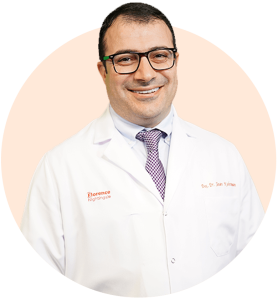
Prof. Dr. Sinan KAHRAMAN
Orthopedics and Traumatology Specialist
Scoliosis Surgery
Prof. Dr. Sinan KAHRAMAN and her expert team safely perform treatments and achieve successful results.
How Is Scoliosis Treated in Children?
The treatment of scoliosis varies depending on the degree of curvature and the child’s age. In adolescent scoliosis, curvatures between 20–40 degrees are treated with a brace, while curvatures over 40 degrees are treated surgically.
How Is Scoliosis Surgery Performed?
There are generally two types of scoliosis surgery. These include the classical method (fusion surgery involving the back and lower spine) and a flexible tethering technique that allows movement instead of using metal rods.
What Are the Advantages of Scoliosis Surgery?
There are generally two types of scoliosis surgery. These include the classical method (fusion surgery involving the back and lower spine) and a flexible tethering technique that allows movement instead of using metal rods.
Postoperative Process
Patients are usually monitored in intensive care for one night. The next day, they are mobilized. They stay in the hospital for 5–6 days for both surgical site and general follow-up before being discharged. In the classical method, sports can be resumed after 3 months, while in the tethering method, sports can be resumed after stitches are removed (approximately 15 days).
TETHERED Scoliosis Surgery
Unlike the classical surgery, this procedure is performed by approaching the spine from the side rather than from the back. Screws are placed on the sides of the vertebrae, and instead of metal rods, a flexible cord (tether) that allows movement is used.
HOW IS TETHERED SCOLIOSIS SURGERY PERFORMED?
It can be performed either minimally invasively using a camera or as a semi-open procedure.
WHAT ARE THE ADVANTAGES OF TETHERED SCOLIOSIS SURGERY?
It allows movement, especially in scoliosis cases affecting the lumbar (lower back) region.
POSTOPERATIVE PROCESS
Patients stay one night in intensive care, followed by 5–6 days of hospitalization before discharge. Sports activities can typically be resumed after one month.
BRACE TREATMENT
Among non-surgical treatments for scoliosis, brace treatment is the most effective. If the curvature is between 20–40 degrees, brace treatment can be applied.
HOW IS BRACE TREATMENT PERFORMED?
An X-ray of the patient is taken and the degree of scoliosis is measured. If it is between 20 and 40 degrees and the child’s skeletal maturity is suitable, a custom-made brace is prepared. The brace should be worn for at least 18 hours a day. Wearing it for 12 hours or less is considered ineffective.
WHAT ARE THE ADVANTAGES OF BRACE TREATMENT?
It prevents the progression of the curvature. If the curvature may require surgery, it can help make the surgery easier.
POST-TREATMENT PROCESS
The effectiveness of the brace is evaluated with X-rays taken every 6 months. The difference between X-rays taken with and without the brace helps determine its effectiveness.
About Me
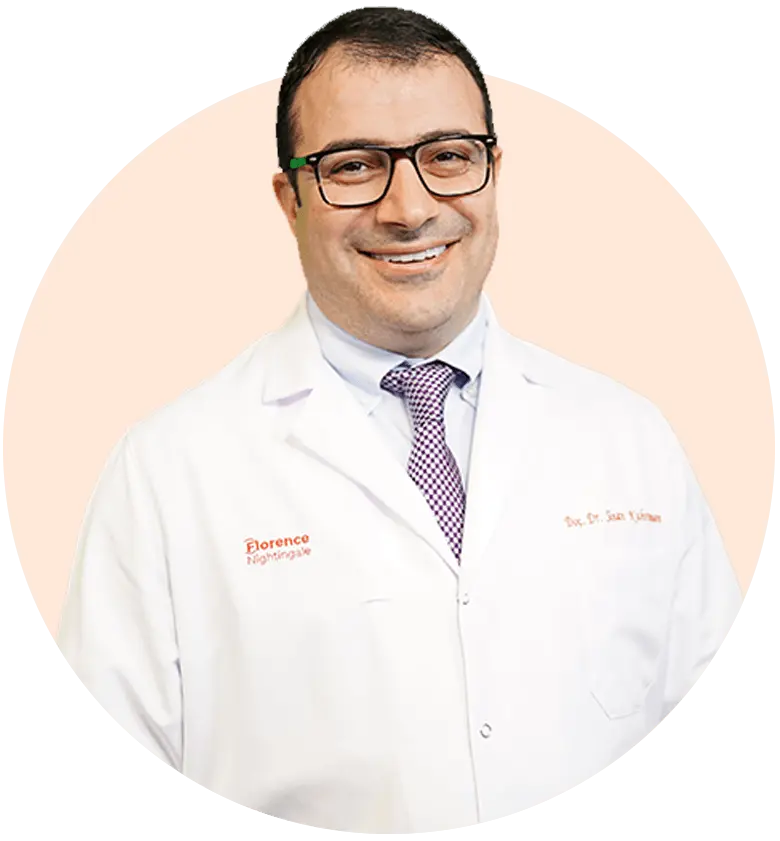
Orthopedics and Traumatology Specialist Prof. Dr. Sinan Kahraman offers permanent and clear solutions to his patients with his professional experience of more than 20 years. With its expertise originating from Cerrahpaşa Faculty of Medicine and Bezm-i Alem University, it has a high success rate, especially in critical orthopedic cases.
Years of Clinical Experience
Provides patients with reliable solutions backed by nearly a quarter-century of surgical and academic experience.
Complex Treatments and Operations
Has proven experience in challenging and complex orthopaedic cases.
Strong Specialist Background
Provides an advanced orthopaedic approach with specialist training rooted in Cerrahpaşa and Bezm-i Alem.
Prof. Dr. Sinan KAHRAMAN
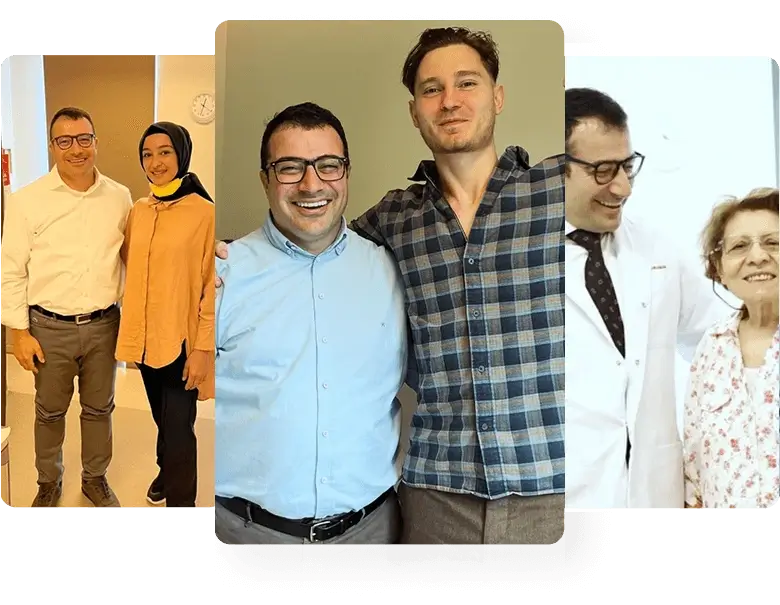
I am grateful to Prof. Sinan for everything and sincerely thank him for his kindness and attentive care. On July 15, 2016, my left leg was severely fractured in a traffic accident. There was a high risk of my leg becoming shorter, impaired, or leaving me with a limp. After three surgeries performed by Prof. Sinan, I was able to return to my place in the squad in amateur football matches.
I met Mr. Sinan because of my daughter’s scoliosis surgery. We are very lucky that he came into our lives during such a difficult time. His experience in his profession and his sincere care and attention to his patient left us in admiration. I saw in Dr. Sinan what it means to truly love one’s profession. After a 14-hour surgery, my daughter regained her health thanks to Dr. Sinan and his team. I don’t even know how to thank him. I wish Dr. Sinan success in his profession and happiness in his life.
Dr. Sinan, endless thanks for everything—we are truly grateful. Thanks to the surgery you performed, my mother’s shoulder pain, which had been keeping her awake especially at night for a year, has come to an end. You diagnosed the causes of her shoulder pain as frozen shoulder, degeneration, narrowing, and a tear, and you successfully treated all of them with a single operation. No matter how much we thank you, it is not enough—we are deeply grateful. We are so glad to have you. May God grant you strength and good health and never let you be absent from our lives. Wishing you continued success, Dr. Sinan.